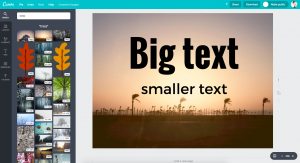
I’ve given a number of presentations and training events recently in brightly lit rooms. The upside of this is that it’s harder for the audience to fall asleep and harder for them to ignore me: it’s also easier for me to build a rapport with them and judge their mood (do I want to move on quickly or are they really, really interested in this bit…?). There’s a huge downside though, as I’m sure most of you who’ve given presentations will have guessed by now.
How do you make the beautiful PowerPoint slides – that you spent hours crafting – visible to your audience in high ambient light? (Well, the good news is that at least you were worried about it: most presenters don’t even think of it!).
There are four (simple) things you can do. The most effective is look carefully at the lighting in the room you’re in – often it’s possible to isolate just the front lights so there’s less shining directly onto your screen. Sometimes it’s even possible to physically move the lights (if they’re spotlights) so they shine to the side of your screen instead of directly on it – but only sometimes. Not only is getting less light on the screen the easiest to think about, it’s also the most effective. Try it first!
Secondly, you can get a better screen with better reflectivity patterns – I’ll often use a blank area of wall: generally they’re less reflective of (badly) positioned lights and as my projector is pointing straight at the wall, it’s got a better chance against light coming down from the ceiling.
susceptible to being hard to project because of this contrast issue.
Finally, you can get more raw power in your projector. The unit of measurement for this is the Lumen. Most “bog standard†projectors are in the range of 1000 to 1500 Lumens but I never go anywhere without my 2500 unit. It’s slightly more expensive, but not when you consider people not being able to see your slides or you having to hire a unit for the day!
It’s going to use more electricity, of course, and be less environmentally friendly, but the simple solution here is to check before you buy that it’s got an ‘eco’ setting – so that when you don’t need the full power, you don’t use the full power: mine cuts down to 1500 Lumens in it’s set-up menu. Simple.