In this week’s TES (which hit my letterbox on Friday 4th July) there’s an article about the idea of teaching/using oracy as a tool in schools – both as something to be taught and as as way of teaching other subjects. A viva, for example, might be a good way of assessing a students understanding of an issue better than how they answer written questions.
It’s a good plan in a lot of ways.
Think about how much business is done on the basis of conversations, rather than written contracts. Sure, the contracts come later but you’ve got to have the conversations beforehand, to get to that point.
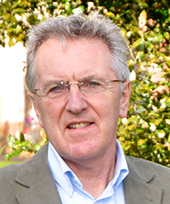
Neil Mercer
What’s equally interesting – and perhaps more useful for us – is the four-fold system of Neil Mercer (University of Cambridge) where he proposes a way to assess a presentation – it’s food for thought about our own business presentations. I’ll just sketch them here – you can figure out for yourself how to use it to assess your own presentations!
- Look at the Physical – how do you use your voice and body)
- What about the Cognitive – how have you marshalled your arguments and used logic etc)
- And the Linguistic – how varied is your vocabulary and how fluently do you use it)
- And always there’s the Social – how have you engaged with your audience etc.
Of course, how you get the feedback to look at your own presentations is a different thing – but at least you’ve now got a framework to do it with!
Some of the four can be handled with a simple iPhone-grade of recording. You can probably get a feel for how varied your language was that way. Perhaps you can even use it to look at the others as well.. .but…. and it’s a big but…. if you do go down that route remember a couple of things
- you should get the permission of the people in the room first (a moral issue)
- you need to do things subtly enough to not have the camera in everyone’s face (and a practical issue).
Either way you’re going to have to find a way to deal with the problem that putting a camera there often changes how people behave – both the presenter and the audience. The only advice I can give you here is to have the technology as un-obtrusive as possible. That means that you hardware needs to be small and subtle and that you need to know how to use it without fuss! You’d be amazed at how many people can’t handle the latter! Rehearsing the camera-work becomes almost as important as rehearsing the presentation itself!


